AX-144 CB to 10M

VK3ZYZ

Moderator
Staff member
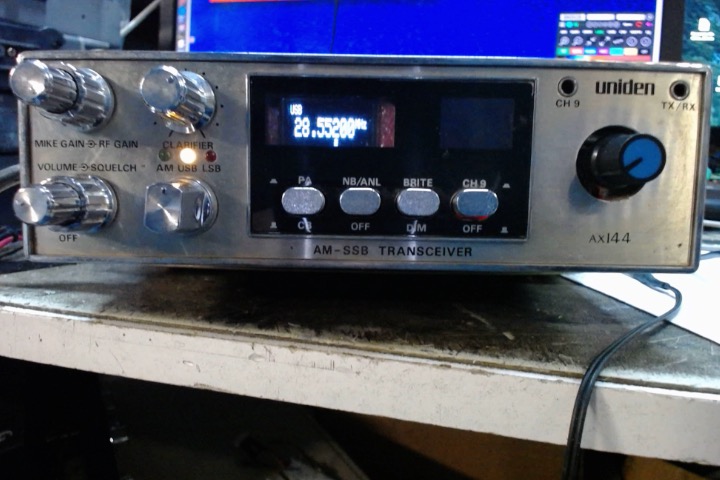
I've started on the AX-144 CB chassis.
First, I removed the channel switch and display.
Then, TR19, TR20 and TR22, along with the PLL chip.
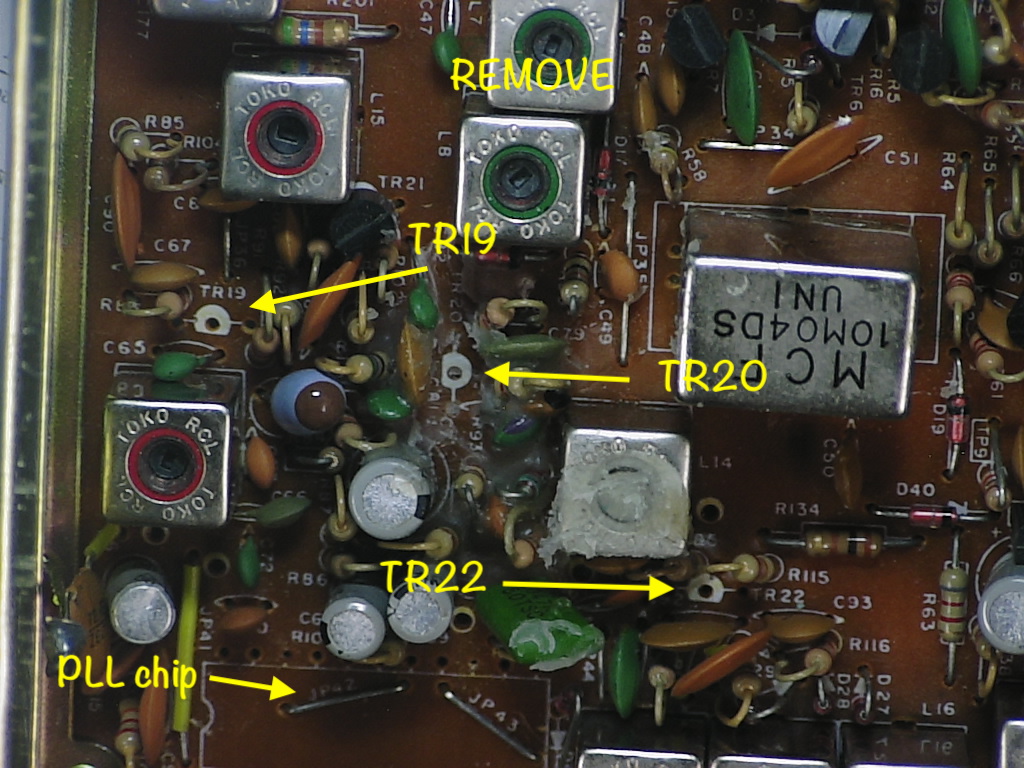
AX-144 Mods2.JPG


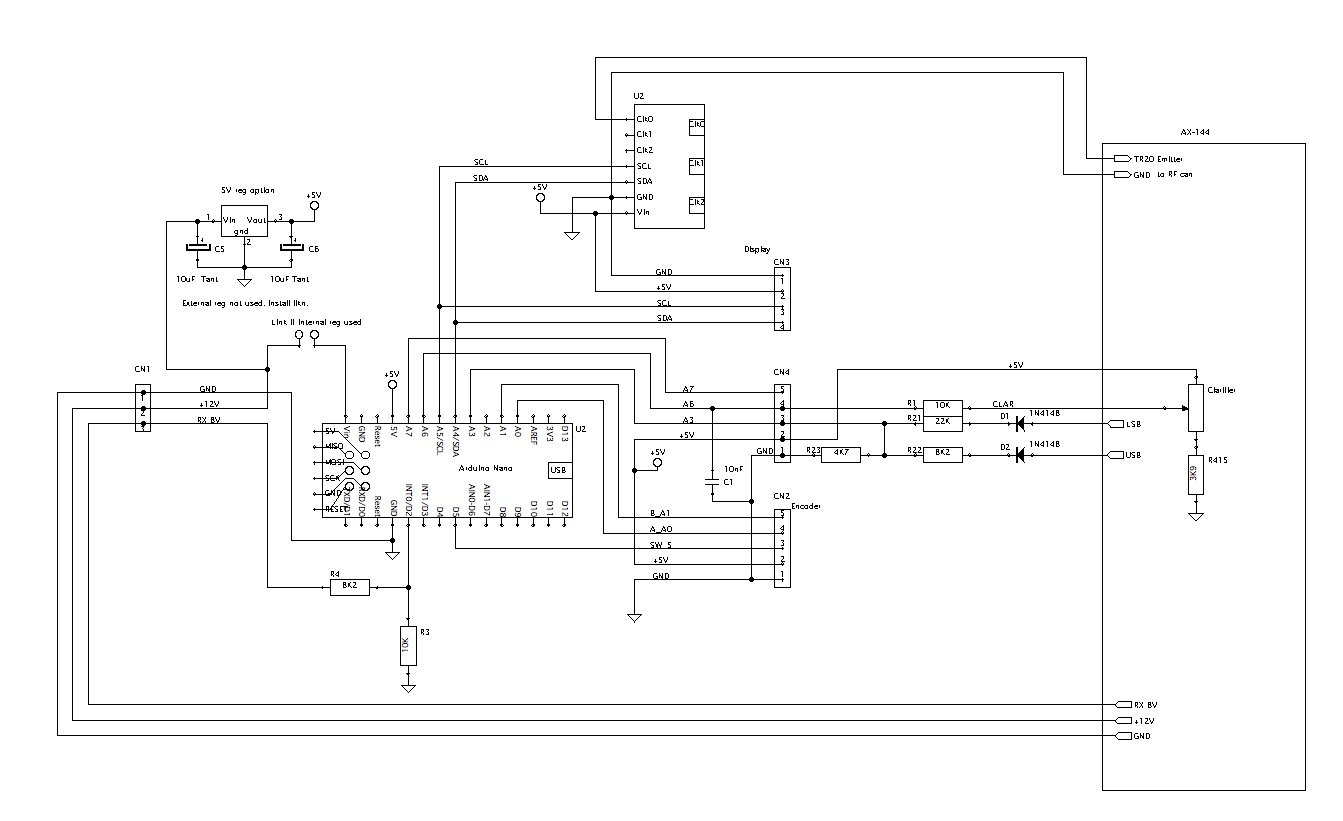
I'm using one of my Arduino synth boards to produce the VFO signal, injected to TR20 Emitter.
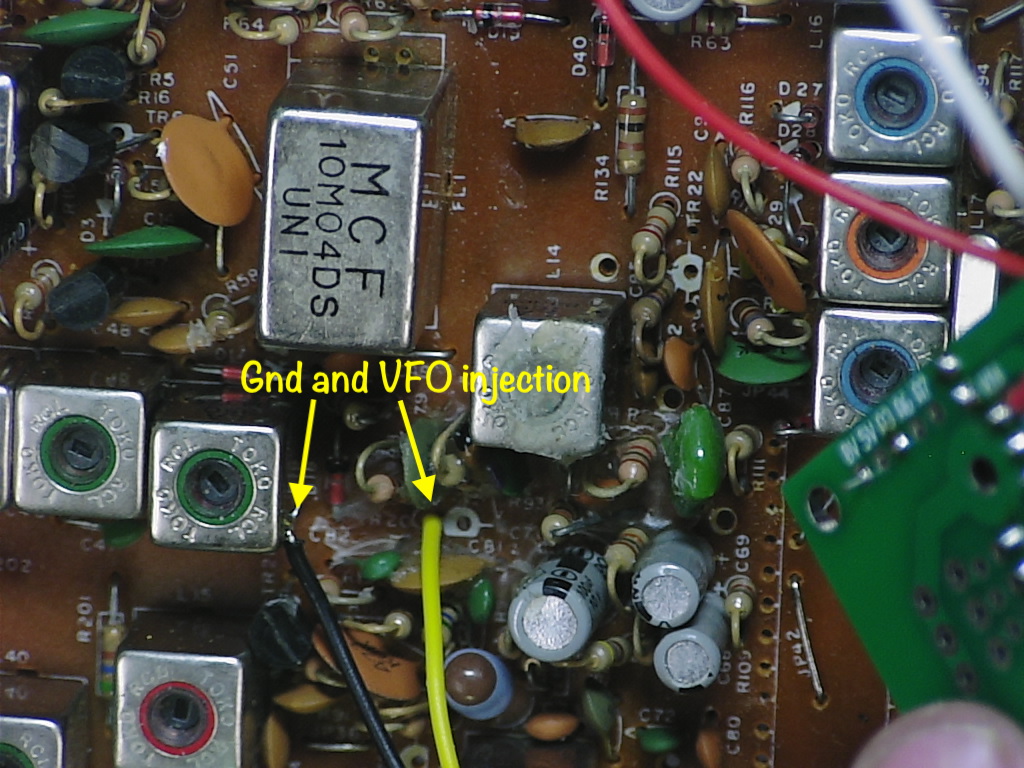
AX-144 VFO input.JPG


To tell the Arduino the mode, some diodes and resistors are added to the mode switch to produce an analog signal.
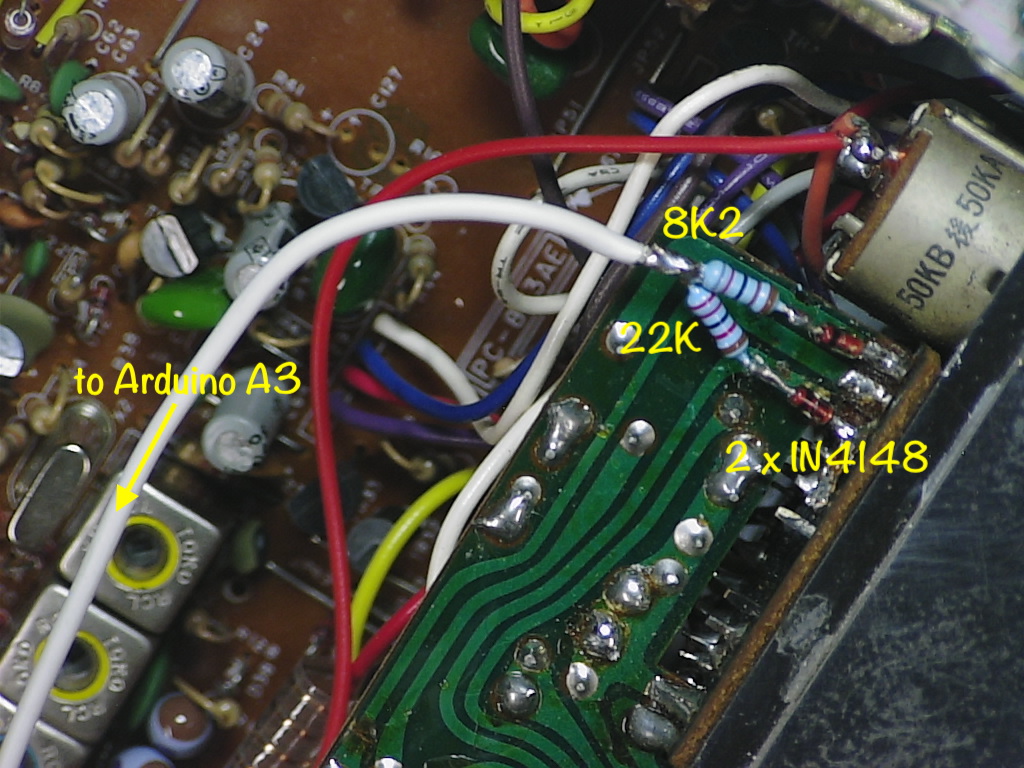
AX-144 Mode.JPG


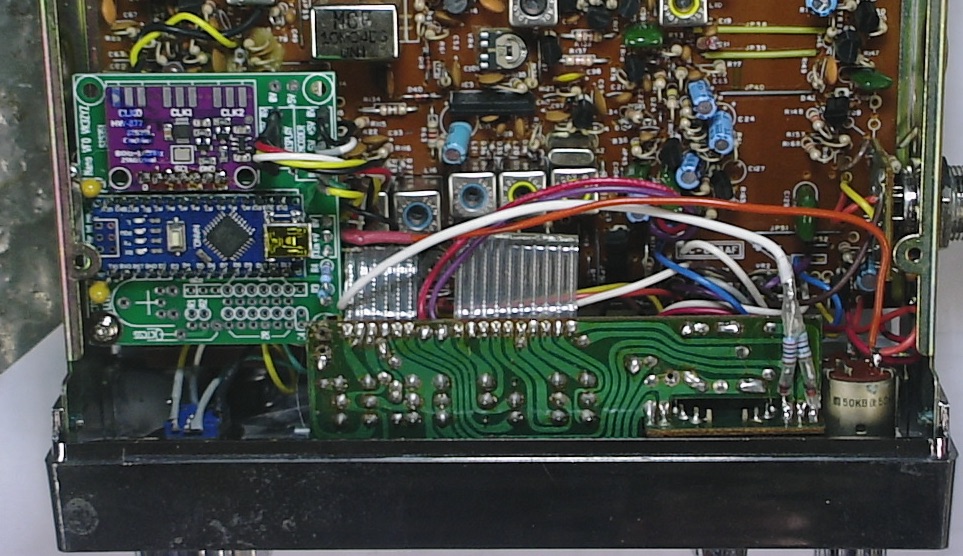
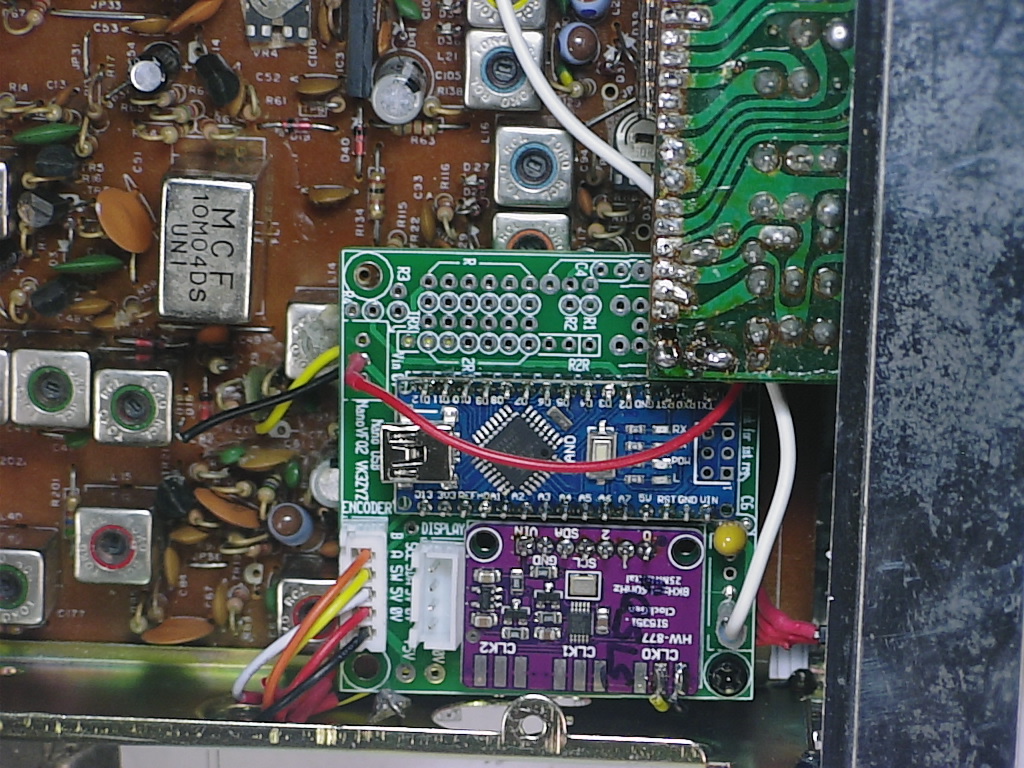
I made a mistake in that the leads to the encoder are to short so the board cannot fit with USB access :(
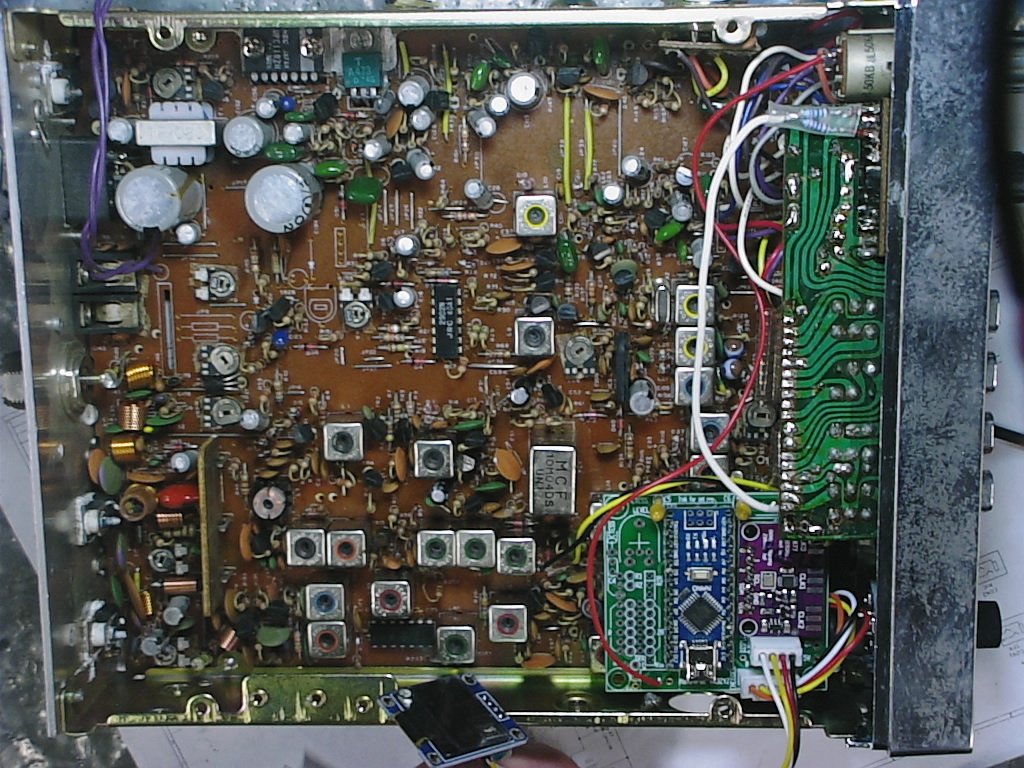
AX-144 Synth Mounted.JPG


Also, the OLED display is not fitted as the only ones I have are Yellow/Blue and that does not show through the coloured front panel.

Here is the code so far and I'll add the circuit later.
It also appears I have an intermittent in the AM and the USB does not run. The power feed to the 10.695 crystal is lost somewhere on USB. LSB works on as does AM (most of the time).
To be continued......
EDIT: New code now in post #9
 
Last edited:
VK3ZYZ

Moderator
Staff member
This morning I found the break in the solder joint that stopped USB working. Also, some leads have been lengthened to also the PCB to mount correctly allowing the USB lead to be plugged in for programming.
AX-144_Synth Mounted2.JPG


I re-ran the Si5351 calibration routine to get the correct calibration number so the frequency is now much more accurate.
Now all I need is some activity on 10M!
 

VK3ZYZ

Moderator
Staff member
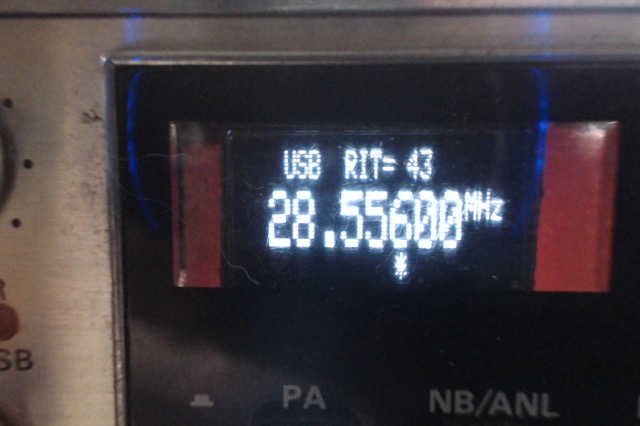
Photo on 21-12-2023 at 8.25 PM.jpg

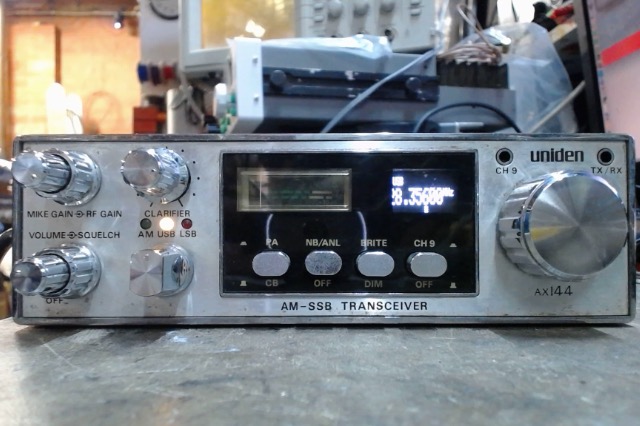
I found a white OLED on an old project but it did not show well enough through the coloured chennel display gap. And, as the meter in this set was very dead, that space was made use of.
EDIT: Post #5 layout is a better front.
 
Last edited:

VK3ZYZ

Moderator
Staff member
Photo on 1-01-2024 at 11.46 AM.jpg

Here is the second one. It took about 6 hours total to do the complete modification so it so a pretty quick one!
The OLED display in in the old LED display position and there are some mods needed to make that work.
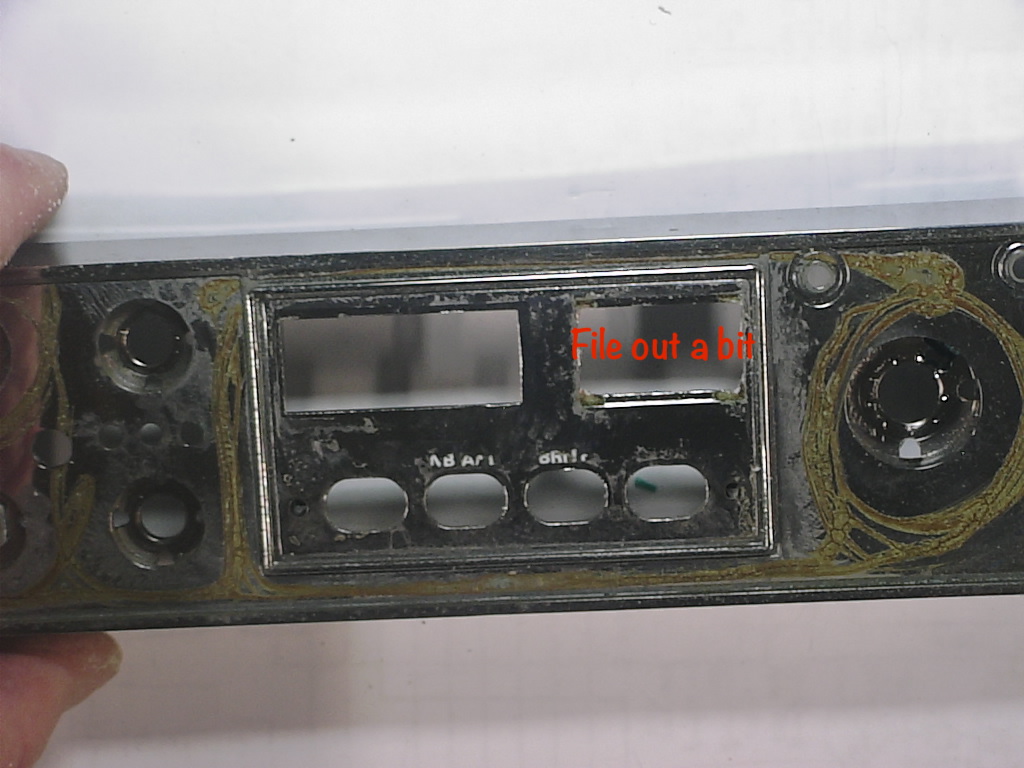
The front may not need to be removed, if you can push the plastic overlay off while in the set. I removed it but next one I will try to do the front mods while it is still on the radio as that will be a lot quicker!
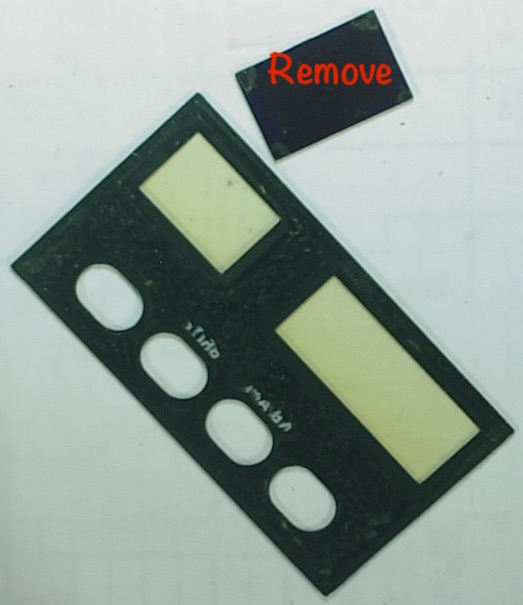
AX-144_frontRemoved.JPG

Also, the hole needs to be enlarged a bit and, but the black screen still covers the display a little.

Then the clear plastic overlay carefully pushed off so the purple cover can be popped off.

AX-144_Perspex.JPG


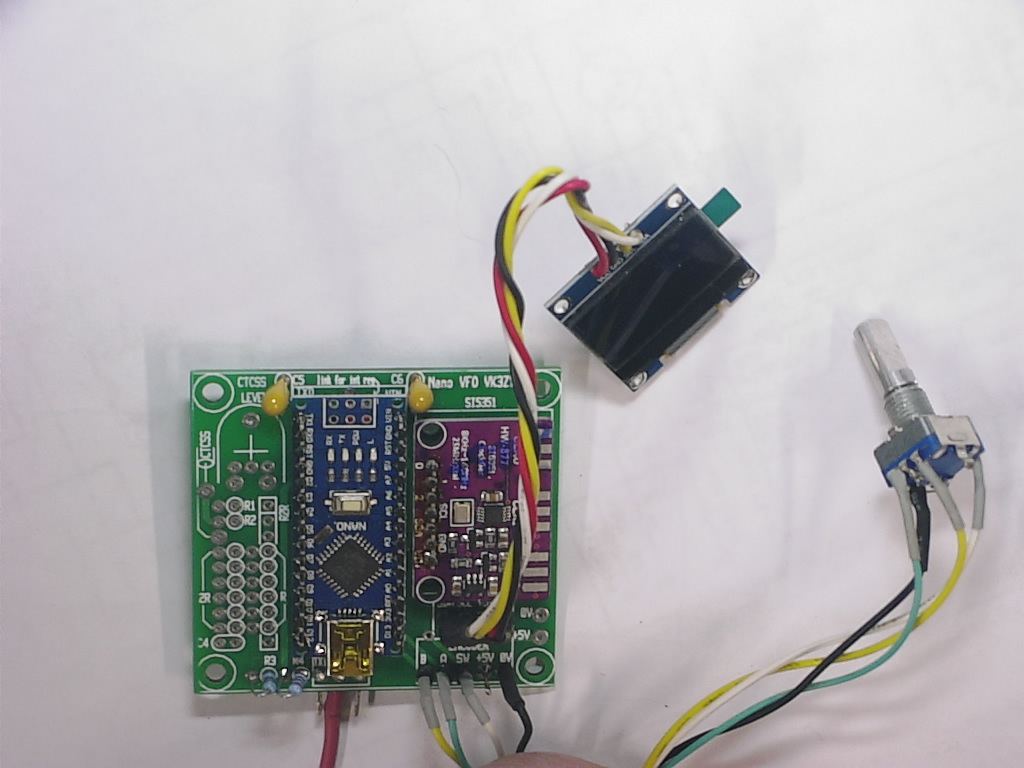
Here is a detail of the VFO board connections using an encoder that does not have the PCB attached. This encoder with the flat on one side of the shaft allows the original channel knob to be used.
VFO-Board_connections.JPG


AX-144_VFO_2_installed.JPG
 
Last edited:

VK3ZYZ

Moderator
Staff member
I have managed to grow a new meter into the set, salvaged from an old AM CB, even tho the meter had to be mounted the other way up, and the red LSB LED was blown so that is now replaced.
It is odd, both AX-144 sets I've done had sus meters.
 

VK3ZYZ

Moderator
Staff member
I've started on a mod to see if I can get the RIT working ok.
Photo on 6-2-24 at 8.00 pm.jpg

There is still work to be done but I think it may be ok, eventually.
Pick the RIT from the PCB...

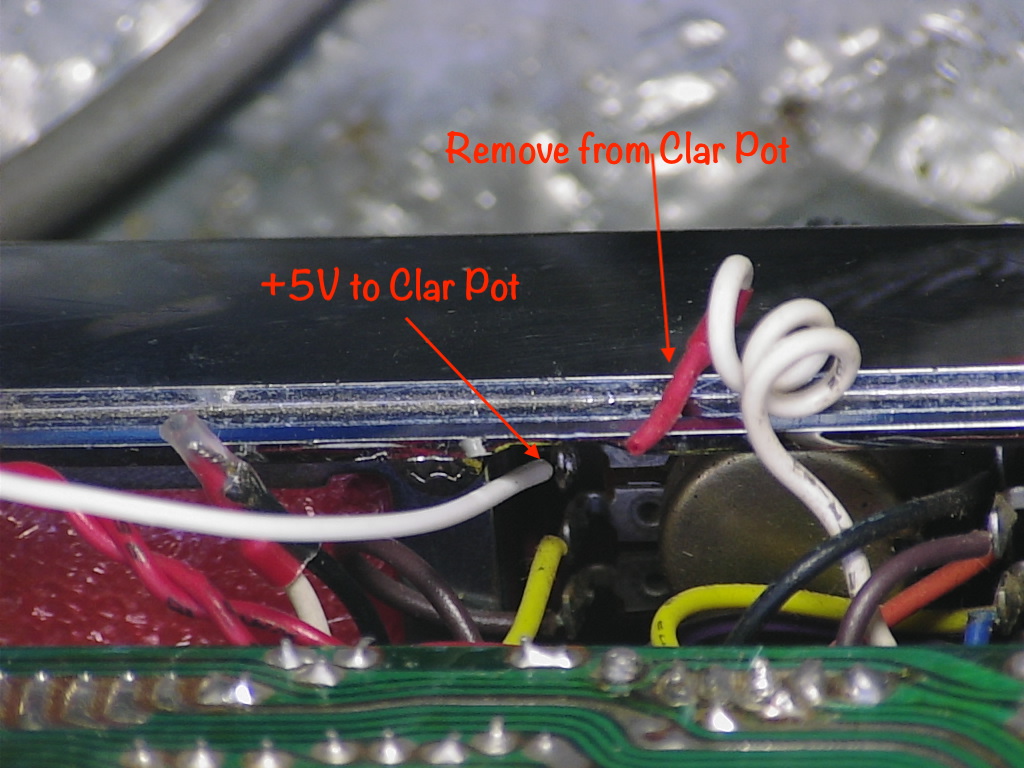
The original Clarifier pot supply is disconnected and it is now fed from the Arduino +5V supply.
ClarPotSupply.JPG


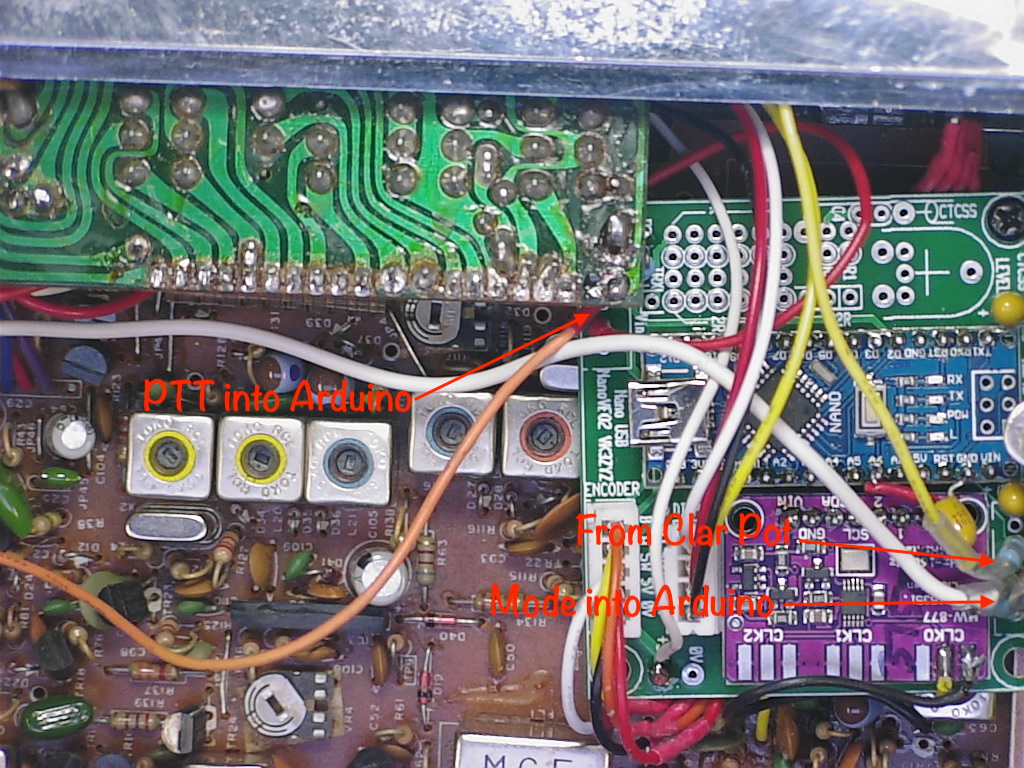
And, below, the RIT (Clarifier pot) signal goes to the Arduino Nano A6 via a 10K resistor... (yellow wire)
The mode is the white wire,
and the PTT is the orange wire, with a series R4 = 8K2 and R3 = 10K to gnd (mounted on the VFO PCB).

AX-144 Arduino inputs.JPG


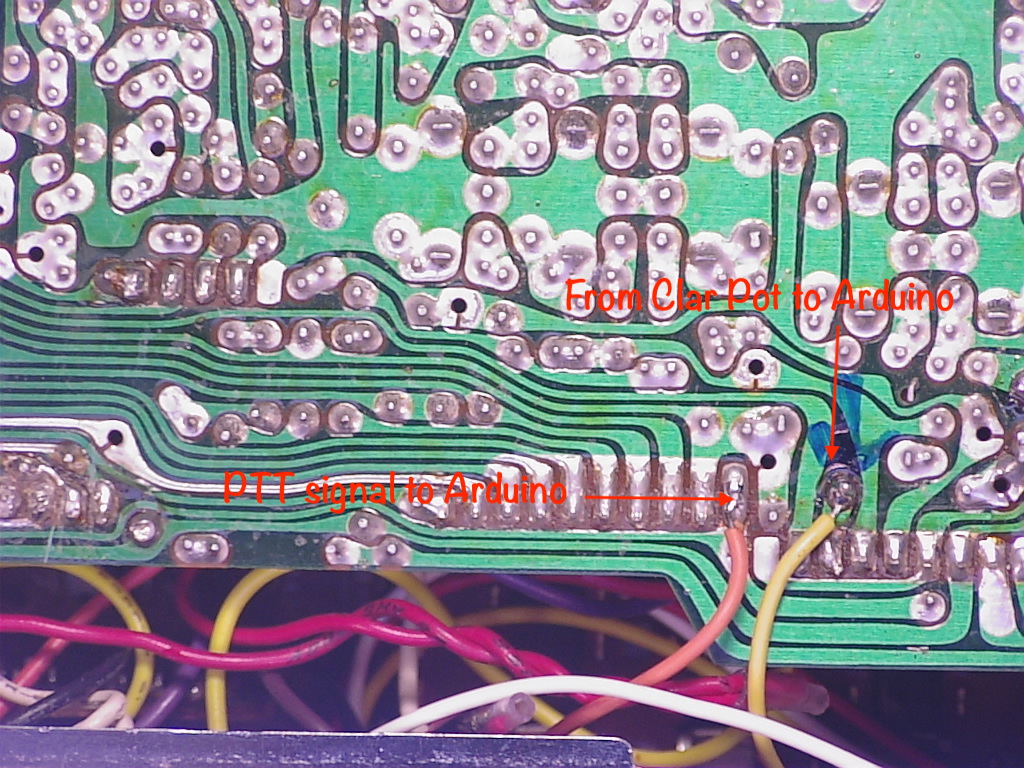
Here are the connections from the main PCB to the Arduino.
AX-144 to Arduino.JPG


And A6 is pulled down with a 12K and a filter cap....
EDIT: The PTT is now wired in and the CLAR pot is fed from +5V, not the RX 8V supply. The 12K resistor is not used now.
AX-144_RIT_A6_2.JPG


Updated the code to a working one, now with the clarifier range of +/- 1.2Khz. Also, the frequency displays inverts on TX as in the synths for other sets, like the FM828 etc.
 

Attachments

Last edited:

VK3ZYZ

Moderator
Staff member
Here is the latest with an extra OLED display as a meter. There is still work to do.
AX-144 Meters.jpg

The encoder update is a little to slow now as the Arduino is pretty busy.
It is ok now, but could be better.
 

Attachments

Last edited:

VK3ZYZ

Moderator
Staff member
I'm updating the VFO design to use an ESP8266 ESP-07 controller.
Here is the proto test setup.
Photo on 13-7-26 at 4.07 pm.jpg

The ESP-07 is about the size of a postage stamp.
 
Last edited:

VK3ZYZ

Moderator
Staff member
I've designed a PCB to fit on the back of the Encoder/OLED board that is used in quite a few of my projects. The Encoder/OLED board will not fit in this set but the VFO board should be usable.

1784605289835.png

1784718866066.png
 
Last edited:

VK3ZYZ

Moderator
Staff member
AX144:P300 signals.jpg

Updated control signals pickup points to feed the Arduino. No main wiring changes needed.
I'll update the circuit when it is redrawn. I accidentally overwrote it with another version :(
 

VK3ZYZ

Moderator
Staff member
Photo on 5-8-26 at 5.32 pm.jpg

The PCBs have arrived, and it looks like they are going to work. There are a couple of sizing oops but so far, all good.
This has just been soldered and programmed and the VFO is producing the correct frequency :)
Oh, I cannot find the correct voltage regulator hence the TO92 pack.
 
Last edited:

VK3ZYZ

Moderator
Staff member
I've just received some "Arduino ESP32 Nano" boards.There are pin compatible with the Arduino Nano but have an ESP32-S3 chip. This makes it a 3V3 system and the Nano 5V pin is no longer there. It is now "VBUS" so it is 5V when powered from the USB socket but not when using Vin. As I was running the VFO from this pin, originally, I just removed the pin from the header and linked the "5V" on the main PCB to the 3V3 pin. All good :)
Photo on 14-8-2026 at 3.12 PM #2.jpg

I did have quite a time getting it to program as it does not appear to be an "official" Arduino ESP32 Nano. It finally worked as an ESP32-S3 Dev Kit. So, now I can use my existing supply of PCBs with the ESP32.
There is an LED on pin 48, and an RGB LED with Red=46, Green=0 and Blue = 45.
Grounding B1 (GPIO 0) on reset will enter boot mode.

The pin definitions I used, referenced to the Arduino Nano.
Code:
// Arduino ESP32 Nano pins
#define D0 44
#define D1 43
#define D2  5
#define D3  6
#define D4  7
#define D5  8
#define D6  9
#define D7 10
#define D8 17
#define D9 18
#define D10 21
#define D11 38
#define D12 47
#define D13 48
#define MOSI 38
#define MISO 47
#define SCK 48
#define A0  1
#define A1  2
#define A3  4
#define A4 11
#define A5 12
#define A6 13
#define A7 14
#define sda 11
#define scl 12
#define B0 46
#define B1  0
#define BootPin 0
#define RedLED 46
#define GreenLED  0
#define BlueLED 45
#define LED_BUILTIN 48

 
Last edited:

VK3YNV

Administrator
Staff member
Might be time to start thinking about a web interface, now that wifi is available on board?
 

VK3ZYZ

Moderator
Staff member
Here is the latest code.
I've changed the 22K (R2 in the circuit above, see post #12) to 15K and added 1 10uF tant to the RIT analog in as the ESP32 ADC is very noisy.
When I get around to it, an updated circuit will be provided as it is a combination of both published circuits now.
The calibration factor value was found by the try it and see method.
 

Attachments

VK3ZYZ

Moderator
Staff member
My new VFO boards arrived today, along with a solder paste stencil so it is a bit easier to do the surface mount parts.
Photo on 19-8-26 at 8.20 pm.jpg

Photo on 19-8-26 at 8.20 pm #2.jpg

I don't have any 6 pin connectors so a couple of 3 pin ones were cut and used instead. 6 pins are on order!
With the 25Mhz TCXO in place of the crystal, the 16.670000Mhz comes out as 16.669998Mhz without adjustment :)
The code is below. The new OLED had a different driver chip (SH110X, not the SSD1306) so the code now allows either one to be selected.
 

Attachments

Last edited:
Top